Top 10 Accounting Software Options for Nonprofits in 2026: Trusted & Affordable Picks
Top 10 accounting software options for nonprofits in 2026, compared by fund accounting, grant tracking, pricing, and Form 990 support.

Top 10 accounting software options for nonprofits is a search that usually comes from someone staring at a spreadsheet they’re afraid to touch, wondering why their board treasurer keeps asking about “restricted funds” like it’s obvious what that means. Nonprofit accounting isn’t the same as business bookkeeping, and using the wrong tool creates real problems come audit season or grant reporting time.
The core difference comes down to fund accounting. Nonprofits need to track restricted and unrestricted funds separately, allocate expenses across programs, and produce reports like the Statement of Financial Position and Statement of Activities that standard business software wasn’t built to generate. On top of that, most nonprofit staff don’t have accounting backgrounds, so ease of use matters just as much as compliance features.
This guide compares ten accounting platforms built for or well-suited to nonprofit use, ranging from free tools for all-volunteer organizations to enterprise-grade systems for large, grant-heavy nonprofits. We’ve included pricing, fund accounting capability, and who each platform actually fits best, so you’re not stuck comparing fifteen open browser tabs on your own. Whether you’re running a small local charity or a national nonprofit with multiple grant streams, there’s a realistic option here for your size and budget.
What Makes Nonprofit Accounting Different?
Before ranking specific tools, it helps to understand why nonprofits can’t just use standard small business accounting software without workarounds. Nonprofit organizations need to handle:
- Fund accounting — separating restricted, temporarily restricted, and unrestricted funds at the ledger level
- Grant tracking — monitoring spending against specific grant terms and reporting requirements
- Functional expense allocation — dividing costs across program, administrative, and fundraising categories
- Form 990 compliance — preparing the annual information return the IRS requires from tax-exempt organizations
- Board-ready financial reporting — producing statements that satisfy both funders and board members, not just a profit and loss statement
With that context, here’s how the top accounting software for nonprofits compares in 2026.
1. Aplos
Aplos is widely considered the most purpose-built fund accounting platform for small to mid-sized nonprofits and churches. It handles true fund accounting natively, without requiring the class-tag workarounds that general business software needs.
Key features:
- Native restricted and unrestricted fund tracking
- Donor management and giving statements built in
- Form 990 support for annual IRS filing
- Affordable pricing tiers built specifically for nonprofit budgets
Best for: Small to mid-sized nonprofits and churches, roughly in the $500K–$3M revenue range, that need true fund accounting without an enterprise-level implementation.
2. QuickBooks Online (Nonprofit)
QuickBooks remains one of the most familiar accounting platforms available, and its nonprofit-friendly setup works well for smaller organizations with straightforward finances. Discounted nonprofit pricing is often available through TechSoup.


Key features:
- Class and location tracking to approximate fund separation
- Massive accountant network, making it easy to find bookkeepers who already know the platform
- Strong bank feed integration and reconciliation tools
- Broad app ecosystem for connecting payroll, fundraising, and payment tools
Best for: Small nonprofits under roughly $1 million in annual revenue with simple finances and no complex restricted grants. Organizations tend to outgrow QuickBooks once grant tracking and fund restrictions become more complex.
3. Sage Intacct
Sage Intacct is frequently described as the gold standard for larger, more complex nonprofits, generally those above $3 million in annual revenue. Its dimensional reporting structure allows organizations to track funds, grants, programs, and locations without maintaining a bloated chart of accounts.
Key features:
- True multi-dimensional fund and grant reporting
- Real-time financial consolidation across multiple entities
- Automation that reduces manual reporting time significantly for finance teams
- Strong audit trail and compliance support
Best for: Large or grant-heavy nonprofits that have outgrown QuickBooks or Aplos and need dimensional reporting across programs, funds, and locations.
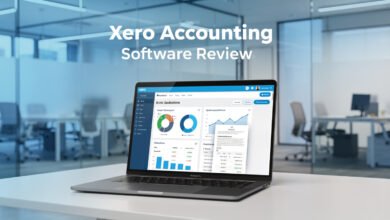
4. Xero
Xero is a solid budget-friendly option for small nonprofit teams, particularly those that don’t yet have complex restricted fund needs. Its unlimited-user pricing model is a meaningful advantage for organizations that rely on multiple volunteers or board members needing system access.
Key features:
- Unlimited users on every plan, useful for volunteer-run finance committees
- Clean, easy-to-navigate interface
- Bank reconciliation and multi-currency support
- Lower cost than most dedicated nonprofit platforms
Best for: Small nonprofits and grassroots organizations without heavy restricted-fund or grant-tracking requirements.
5. Wave
Wave is the clear choice for all-volunteer organizations that need genuinely free accounting software. It won’t handle complex fund accounting, but for very small nonprofits just getting off the ground, the cost savings matter more than advanced features.
Key features:
- Free core accounting and invoicing
- Simple enough for volunteer treasurers without an accounting background
- Basic expense tracking and financial reporting
- No cost barrier to getting a second board member involved in the books
Best for: All-volunteer nonprofits and very small organizations without restricted funds or complex grant reporting needs.
6. Blackbaud Financial Edge NXT
Blackbaud Financial Edge NXT is built specifically for enterprise-level nonprofits with significant donor and grant activity. It integrates tightly with Raiser’s Edge NXT, Blackbaud’s fundraising platform, giving larger organizations a connected view of fundraising and financial data.
Key features:
- Subfund accounting for detailed grant and program tracking
- Deep integration with Blackbaud’s fundraising and donor management tools
- Strong compliance and audit support for large organizations
- Configurable reporting built around donor and grant complexity
Best for: Large, donor and grant-heavy nonprofits that need fundraising and accounting data closely connected.
7. MIP Fund Accounting
MIP Fund Accounting is a longtime staple for larger nonprofits and government agencies that need a highly configurable fund accounting system. It’s built to handle financial complexity that simpler software can’t manage.
Key features:
- Unlimited funds with configurable modules
- Strong reporting for grant compliance and multi-entity structures
- Built specifically for nonprofit and government accounting needs
- Scales well for organizations with complex organizational structures
Best for: Large or medium nonprofits and government-adjacent organizations requiring extensive, configurable fund reporting.
8. Zoho Books
Zoho Books offers an affordable, if less nonprofit-specific, option for organizations already using other Zoho products. It doesn’t have native fund accounting, but its automation and reporting tools work reasonably well with some setup.
Key features:
- Free plan available for smaller organizations under a revenue threshold
- Client and donor portals for external communication
- Workflow automation for recurring transactions
- Integrates with the broader Zoho ecosystem, including CRM and inventory tools
Best for: Small nonprofits already using Zoho products that want to keep their financial data connected across systems.
9. MoneyMinder
MoneyMinder is designed specifically for volunteer treasurers running small nonprofits, PTAs, and community organizations. It intentionally keeps things simple rather than trying to compete with enterprise fund accounting platforms.
Key features:
- Built specifically for volunteer, non-accountant users
- Simple budget tracking and reporting
- Low cost, accessible for very small community organizations
- Straightforward bank reconciliation
Best for: Volunteer-run organizations, PTAs, and small community groups that need something simpler than full fund accounting software.
10. FastFund by Araize
FastFund rounds out the list as an affordable, nonprofit-specific accounting option built around fund accounting basics without the enterprise price tag. It’s a solid middle ground for organizations that have outgrown Wave or basic QuickBooks but aren’t ready for Sage Intacct or Blackbaud.
Key features:
- Native fund accounting designed specifically for nonprofits
- Payroll and donor management modules available
- More affordable than enterprise-grade fund accounting platforms
- Cloud-based access for distributed nonprofit teams
Best for: Small to mid-sized nonprofits that need dedicated fund accounting without paying for enterprise-level complexity.
How to Choose the Right Nonprofit Accounting Software
With ten options on the table, narrowing down the right fit comes down to a few honest questions:
- Do you receive restricted grants or donations?
If yes, prioritize software with native fund accounting rather than relying on class-tag workarounds.
- What’s your annual revenue?
Organizations under $1M often do fine with QuickBooks or Xero; $500K–$3M orgs tend to fit well with Aplos; $3M+ organizations generally need Sage Intacct, Blackbaud, or MIP.
- Who’s doing the bookkeeping?
Volunteer treasurers benefit from simpler tools like MoneyMinder or Wave, while dedicated finance staff can handle more complex platforms.
- Do you need Form 990 support built in?
Purpose-built nonprofit tools like Aplos generally handle this more directly than general business software.
- What’s your total budget, not just the subscription price?
Enterprise platforms often cost two to three times the annual subscription in year one once implementation and training are factored in.
For a deeper look at how fund accounting requirements differ by nonprofit size, this nonprofit accounting software buyer’s guide breaks down pricing and fit by revenue range. If you want to compare platforms specifically by fund accounting capability across sectors, this fund accounting software comparison covers nonprofit, government, and education use cases side by side.
Conclusion
Choosing from the top 10 accounting software options for nonprofits ultimately comes down to matching the platform to your organization’s size, grant complexity, and who’s actually managing the books day to day. Small and all-volunteer organizations do well with Wave, Xero, or MoneyMinder, mid-sized nonprofits with real fund accounting needs tend to land on Aplos or FastFund, and larger, grant-heavy organizations generally need the dimensional reporting power of Sage Intacct, Blackbaud Financial Edge NXT, or MIP Fund Accounting. Rather than choosing based on brand recognition, be honest about your fund accounting needs, your annual revenue, and your team’s accounting experience before committing to a platform your organization will likely be using for years.